FITNESS PLAN
This challenge focus on developing strong, well-rounded glutes. It consists of 4 days of training in the gym with 1 bonus day which you can include if you feel like stepping up your game and reaching optimum results. The program is focused and designed for intermediate to advanced lifters, however anyone will benefit from it.
NOTES: For the first week of the fitness plan, take your time to get used to the exercises and make sure to perform each exercise with proper technique. Thereafter, start to put focus on progressive overload. This simply means that you want to perform the exercises with a heavier weight over the period of 8 weeks. Remember, NEVER sacrifice your technique for the amount weight you lift. Always make sure that your technique is on point before you increase the weight.
Focus on the mind-to-muscle connection. This means that you want to feel the muscle being at work. If you don’t, then rather lower the weight and correct your technique. Also, try to contract the muscle a few times before the lift to be sure you consistently feel it during the lift. Control each exercise and remember, each repetition counts!
Do your best and work hard. Complete each given set just shy from failure. This means that you want to stop only when you feel like you have more or less 1 to 2 repetitions left before you won’t be able to do a single repetition anymore.
You can also sometimes go for complete failure, as long as it’s done with perfect technique.
Make sure you are properly warmed up before you start any workout. Pick something you like to get moving and warmed up. Below are a few warm-up examples which you can do.
Schedule and commit to the days and times per week which you will be able to complete your workouts.
The workouts are set out from Day 1 to Day 4 with the bonus day as Day 5. Perform them in this given order.
Remind yourself daily that “I get to” instead of “I have to.” We often make the things that are actually blessings in our life seem like an obstacle. Yes, you will not always feel motivated, but it’s important to realize this and to work through it and to change that mindset to being grateful!
Have fun and enjoy the process. Realize that this is not a quick fix and there are no shortcuts. This is a lifelong journey and a choice you make which is so life fulfilling. This is about so much more than just body transformation.
This really strengthens all mind, body, and soul.
WARM-UP EXAMPLES:
• 5-10 minutes bicycle/treadmill/stair climber/rowing machine
• Bodyweight exercises (squats/lunges)
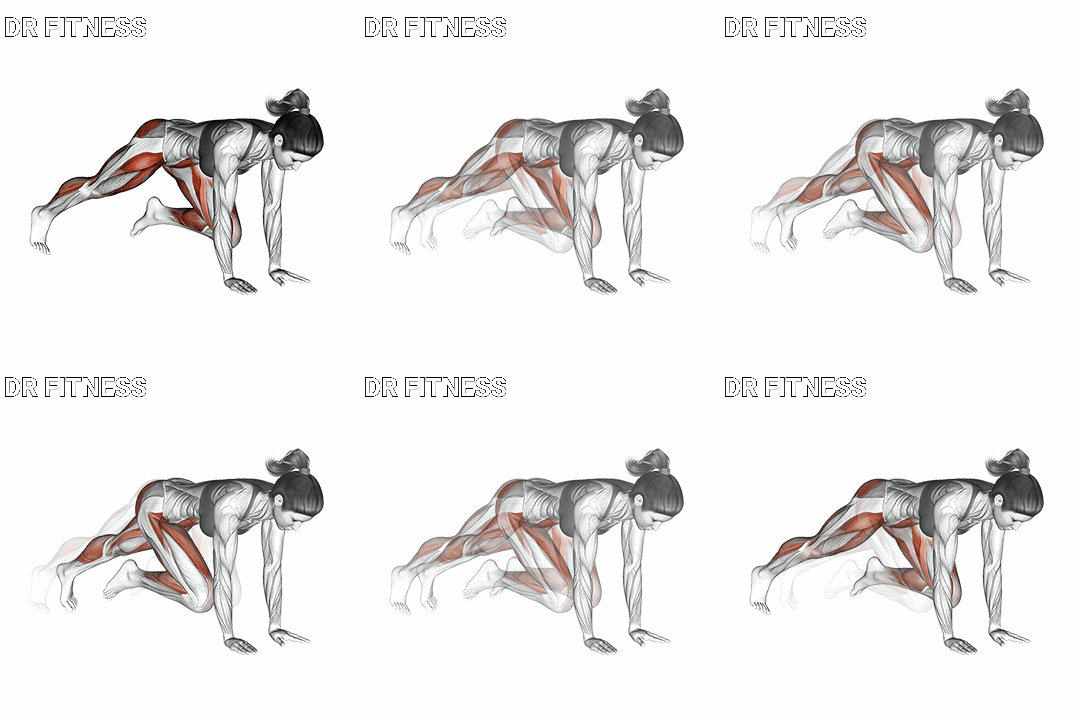
• Jumping Rope/Mountain Climbers/Jumping Jacks/Squat Jumps/Split Squat Jumps
• Foam Rolling, Dynamic Stretching (leg/arm swings)
* Key Words: DB – Dumbell / BB – Barbell
Superset: Perform two exercises back-to-back with minimum rest in between.
CARDIO/HIIT -OPTIONAL!
You can include any form of cardio 2 times per week for 20-30 minutes if your daily job is perhaps sedentary.
HIIT can be done once per week. Example: Perform 30 seconds all out intensity with 60 second breaks for 10 rounds.
You can perform this on the treadmill, bicycle, running track, or wherever you prefer.
Day 1
GLUTES & HAMSTRINGS, CALVES
“Challenging Yourself Every Day Is One Of The Most Exciting Ways To Live!”
5 TO 10 MINUTE WARM-UP
SUPERSET:
1A. DB Sumo Squat
1B. Seated Banded Hip Abduction
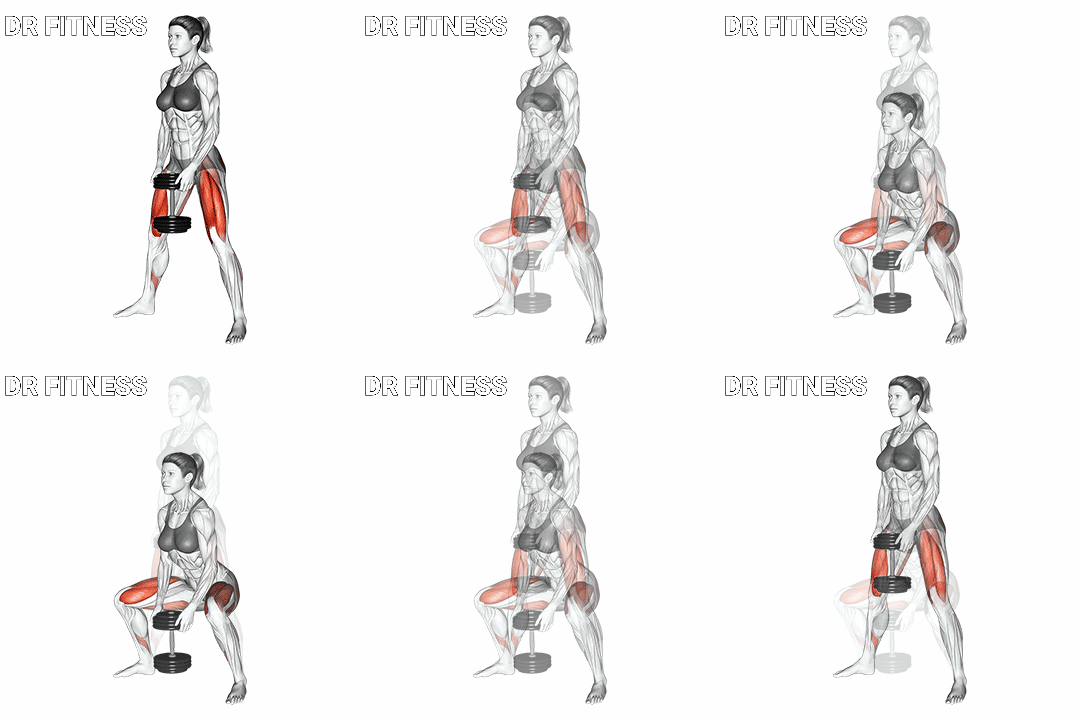
DB Sumo Squat
Starting Position:
• Stand with feet wider than shoulder-width, toes pointing outward at a 45-degree angle.
• Hold a dumbbell with both hands, letting it hang down between your legs.
Descent:
• Push your hips back and bend your knees, lowering your body.
• Keep your chest upright, back straight, and knees tracking over your toes.
Ascent:
• Drive through your heels to stand up, engaging your glutes and core.
• Avoid locking your knees at the top; stand tall with a neutral spine.
Breathing:
• Inhale as you lower down, exhale as you rise.
Seated Banded Abductions
Starting Position:
• Sit on a chair or bench with your feet flat on the floor, hip-width apart.
• Place a resistance band around your thighs, just above your knees.
• Keep your back straight and core engaged.
Movement:
• Press your knees outward against the band as far as you can while keeping your feet planted.
• Hold the contraction for a moment, then slowly return your knees to the starting position.
Breathing:
• Exhale as you push your knees outward, inhale as you return to the starting position.
2. BB Sumo Squat
Starting Position:
• Set the barbell on a squat rack at chest height.
• Step under the bar, placing it on your upper traps (not your neck).
• Take a wide stance with toes pointed outward (45-degree angle).
• Grip the bar slightly wider than shoulder-width, elbows pointed down and back.
• Lift the bar off the rack and step back into your stance.
Descent:
• Push your hips back and bend your knees, lowering your body.
• Keep your chest up, back neutral, and knees tracking over your toes.
• Lower until your thighs are parallel to the floor or deeper, if possible.
Ascent:
• Drive through your heels and push your hips forward to stand back up.
• Keep your core engaged and chest lifted throughout the movement.
Breathing:
• Inhale as you lower down, exhale as you rise.
3. BB Hip Thrust
Starting Position:
• Sit on the floor with your upper back against a bench, knees bent, and feet flat on the floor.
• Roll a barbell over your hips, using a pad for comfort.
• Position your feet hip-width apart, directly under your knees.
Movement:
• Drive through your heels, thrust your hips upward, and squeeze your glutes at the top.
• Keep your back neutral, and don’t arch your lower back.
• Lower your hips back down in a controlled motion.
Breathing:
• Exhale as you thrust your hips up, inhale as you lower back down.
4. DB Stiff Legged Deadlift
Starting Position
• Stand with your feet hip-width apart.
• Hold a dumbbell in each hand, palms facing your thighs.
• Keep a slight bend in your knees and engage your core.
Movement
• Hinge at the hips (not the waist) and push your hips back while lowering the dumbbells towards the ground.
• Keep the dumbbells close to your legs as you descend.
• Keep your back straight (neutral spine) and avoid rounding your lower back.
• Lower the dumbbells until you feel a stretch in your hamstrings (typically around mid-shin or just below the knees).
Return
• Reverse the movement by driving your hips forward to return to the starting position.
• Keep the dumbbells close to your body throughout the movement.
• Fully extend your hips at the top, but avoid arching your back.
Breathing
• Inhale as you lower the dumbbells.
• Exhale as you return to the standing position.
5. Lying Machine Hamstring Curl
Setup
• Adjust the machine so that your knees are aligned with the machine’s pivot point and your ankles are under the padded bar.
• Lie face down on the bench and position your legs fully extended.
• Grip the handles or sides of the machine to stabilize your upper body.
Movement
• Curl your legs upward by bending your knees, bringing your heels toward your glutes.
• Focus on squeezing your hamstrings as you curl.
• Keep your hips pressed into the bench to avoid lifting your lower body.
Return
• Slowly lower the weight back to the starting position, fully extending your legs without locking your knees.
Breathing
• Exhale as you curl your legs up.
• Inhale as you return to the starting position.
6. Lying Machine Single Leg Hamstring Curl
Setup
• Adjust the machine so that your knees are aligned with the pivot point, and the ankle pad rests comfortably on your lower leg.
• Lie face down on the bench, positioning one leg under the pad.
• Grip the handles to stabilize your torso and keep your upper body in place.
Movement
• Curl the working leg upward by bending your knee, bringing your heel towards your glute.
• Focus on contracting your hamstring throughout the motion.
• Keep your hips pressed into the bench to avoid lifting your torso.
Return
• Slowly lower the weight back to the starting position, fully extending your leg without locking the knee.
Breathing
• Exhale as you curl your leg up.
• Inhale as you lower it back down.
7. Seated Calf Raise
Setup
• Sit down on the machine with your feet flat on the foot platform and knees bent at a 90-degree angle.
• Position the padded lever or cushion on your lower thighs, just above your knees.
• Adjust the weight according to your fitness level.
Movement
• Press through the balls of your feet to lift the weight by extending your ankles (calf raise).
• Keep your heels off the platform, and focus on fully extending your calves.
• Hold the top position briefly, squeezing your calves.
Return
• Slowly lower the weight back down, fully stretching your calves as your heels move towards the ground.
Breathing
• Exhale as you push up to raise the weight.
• Inhale as you lower the weight back down.
8. Standing Calf Raise
Setup
• Stand on the machine with your feet flat on the foot platform, positioning your toes and balls of your feet on the edge.
• Place your shoulders under the padded shoulder rest and adjust the weight to your desired level.
• Ensure your knees are slightly bent or straight (don’t lock them) for optimal movement.
Movement
• Push through the balls of your feet, lifting your heels as high as you can.
• Focus on contracting your calves as you rise, and pause briefly at the top.
Return
• Slowly lower your heels back down, stretching your calves as your ankles flex.
• Keep a controlled pace, avoiding letting the weight drop too quickly.
Breathing
• Exhale as you raise your heels.
• Inhale as you lower your heels back down.
Day 2
BACK & SHOULDERS, ABS
“Today, I Get To. I Don’t Have To. I Am So Blessed!”
5 TO 10 MINUTE WARM-UP
1. BB Standing Overhead Press
Setup
• Stand with your feet shoulder-width apart, with the barbell resting on your upper chest (just below your chin).
• Grip the barbell with your hands slightly wider than shoulder-width apart, with palms facing forward (overhand grip).
• Ensure the bar is positioned directly above your collarbones, elbows slightly in front of the bar.
• Engage your core and maintain a straight posture, bracing your lower back.
Movement
• Press the barbell overhead by extending your arms, keeping the bar in a straight line.
• As you push the bar, slightly push your head back and then forward as the bar passes, creating a smooth, vertical path.
• Lock out your elbows at the top, but avoid overextending.
Return
• Slowly lower the barbell back to the starting position at your upper chest, keeping control of the weight.
• Inhale as you lower the bar.
Breathing
• Exhale as you press the barbell overhead.
• Inhale as you lower the barbell back to your chest.
2. Lateral Side Raises
Setup
• Stand tall with your feet shoulder-width apart.
• Hold a dumbbell in each hand with a neutral grip (palms facing your torso), and let your arms hang naturally by your sides.
• Keep a slight bend in your elbows to reduce strain on the joints.
• Engage your core and maintain a neutral spine throughout the movement.
Movement
• With a controlled motion, raise both dumbbells out to the sides, keeping your elbows slightly bent.
• Lift until your arms are parallel to the floor or slightly higher, ensuring the movement comes from your shoulders.
• Avoid shrugging your shoulders or using your traps; the focus should be on the lateral deltoids.
Return
• Slowly lower the dumbbells back down to the starting position in a controlled manner.
• Don’t let the dumbbells drop too quickly; keep the tension on your shoulders.
Breathing
• Exhale as you raise the dumbbells.
• Inhale as you lower them back down.
3. Cable Rope Face Pulls
Setup
• Attach a rope to a cable machine at head height or slightly above.
• Stand facing the machine with your feet shoulder-width apart.
• Grab both ends of the rope with an overhand grip, palms facing each other.
• Step back slightly so that there’s tension on the cable, and take a few steps back to create some slack.
Movement
• Pull the rope towards your face, keeping your elbows high and out to the sides. Your hands should come near your face, with your thumbs pointing toward your ears and elbows pointing behind you.
• Focus on pulling the rope with your upper back and rear deltoids, not your hands or forearms.
• Squeeze your shoulder blades together at the top of the movement.
Return
• Slowly and with control, return to the starting position, fully extending your arms, but don’t let the weight stack touch.
• Maintain tension in the cable throughout the entire movement.
Breathing
• Exhale as you pull the rope towards your face.
• Inhale as you return to the starting position.
SUPERSET:
4A. Lat Pulldown
4B. BB Back Row
Lat Pulldown
Setup
• Sit down on the lat pulldown machine and adjust the thigh pad so that your legs are securely under it. This will keep you stable during the movement.
• Reach up and grab the bar with an overhand (pronated) grip, hands slightly wider than shoulder-width apart.
• Keep your chest up and back straight, engaging your core. Make sure your arms are fully extended at the start, and your shoulders are not hunched.
Movement
• Pull the bar down towards your chest, leading with your elbows, not your hands. Imagine trying to bring your elbows down and back.
• As you pull, keep your chest lifted and avoid leaning back excessively. Focus on squeezing your shoulder blades together at the bottom of the movement.
• The bar should come down to about the upper part of your chest or collarbone area.
Return
• Slowly and with control, release the bar back to the starting position, allowing your arms to fully extend and your lats to stretch.
• Keep your torso stable and avoid jerking or using momentum.
Breathing
• Exhale as you pull the bar down.
• Inhale as you release the bar back to the starting position.
BB Bent Over Back Row
Setup
• Stand with your feet shoulder-width apart, barbell in front of you on the ground.
• Bend at the hips and knees, keeping your back straight (not rounded).
• Grip the bar with your hands slightly wider than shoulder-width apart, using an overhand (pronated) grip.
• Keep your chest up, shoulders back, and spine neutral.
Movement
• Pull the barbell toward your lower rib cage or upper stomach by driving your elbows straight back, squeezing your shoulder blades together at the top of the movement.
• Your elbows should travel along your sides (not flaring out), and the bar should stay close to your body.
• Focus on retracting your shoulder blades as you row, ensuring you engage your lats and upper back.
Return
• Slowly lower the bar back down to the starting position, fully extending your arms, but keep tension in your back muscles.
• Maintain a neutral spine and do not round your back as you lower the bar.
Breathing
• Exhale as you row the bar up toward your torso.
• Inhale as you lower the bar back to the starting position.
4A. Lat Pulldown
4B. BB Back Row
5. Cable Close Grip Seated Row
Setup
• Sit down at the cable row machine with your feet flat on the platform and knees slightly bent.
• Grasp the close-grip handle (usually a V-shaped or narrow bar) with both hands, using a neutral or overhand grip (palms facing each other).
• Sit upright, maintaining a straight back and engaged core. Extend your arms fully so the cable is taut, and your torso is slightly forward with your shoulders relaxed.
Movement
• Pull the handle towards your torso, leading with your elbows, not your hands.
• Keep your elbows close to your sides as you row, focusing on squeezing your shoulder blades together at the top of the movement.
• Your chest should remain lifted and your back straight as you pull, without leaning backward or rounding your shoulders.
Return
• Slowly extend your arms back out, fully stretching the lats and allowing your shoulders to protract (move forward) as you return to the starting position.
• Do not let the weight stack touch the bottom, maintaining tension in the cable.
Breathing
• Exhale as you pull the handle towards your torso.
• Inhale as you slowly return the handle to the starting position.
SUPERSET:
6A. Cable Crunch
6B. Plank Hip Dips
Cable Crunch
Setup
• Attach a rope handle to the high pulley on a cable machine.
• Kneel down in front of the machine, facing it. Adjust the rope so it’s at the top of your head.
• Grasp the rope with both hands, and bring it down to the sides of your head or around your neck.
• Position your knees at about a 90-degree angle and ensure your thighs are comfortably resting on the floor or padded platform. Keep your torso upright and core engaged.
Movement
• Initiate the movement by flexing your torso forward, bringing your elbows toward your thighs.
• Keep your hips stationary and focus on contracting your abs, not using momentum or pulling with your arms.
• Squeeze your core at the bottom of the movement, bringing your chest toward your thighs and your elbows toward your knees.
Return
• Slowly reverse the motion, extending your torso back to the starting position with control, allowing your abs to fully stretch.
• Avoid arching your lower back as you return to the starting position.
Breathing
• Exhale as you crunch forward.
• Inhale as you return to the starting position.
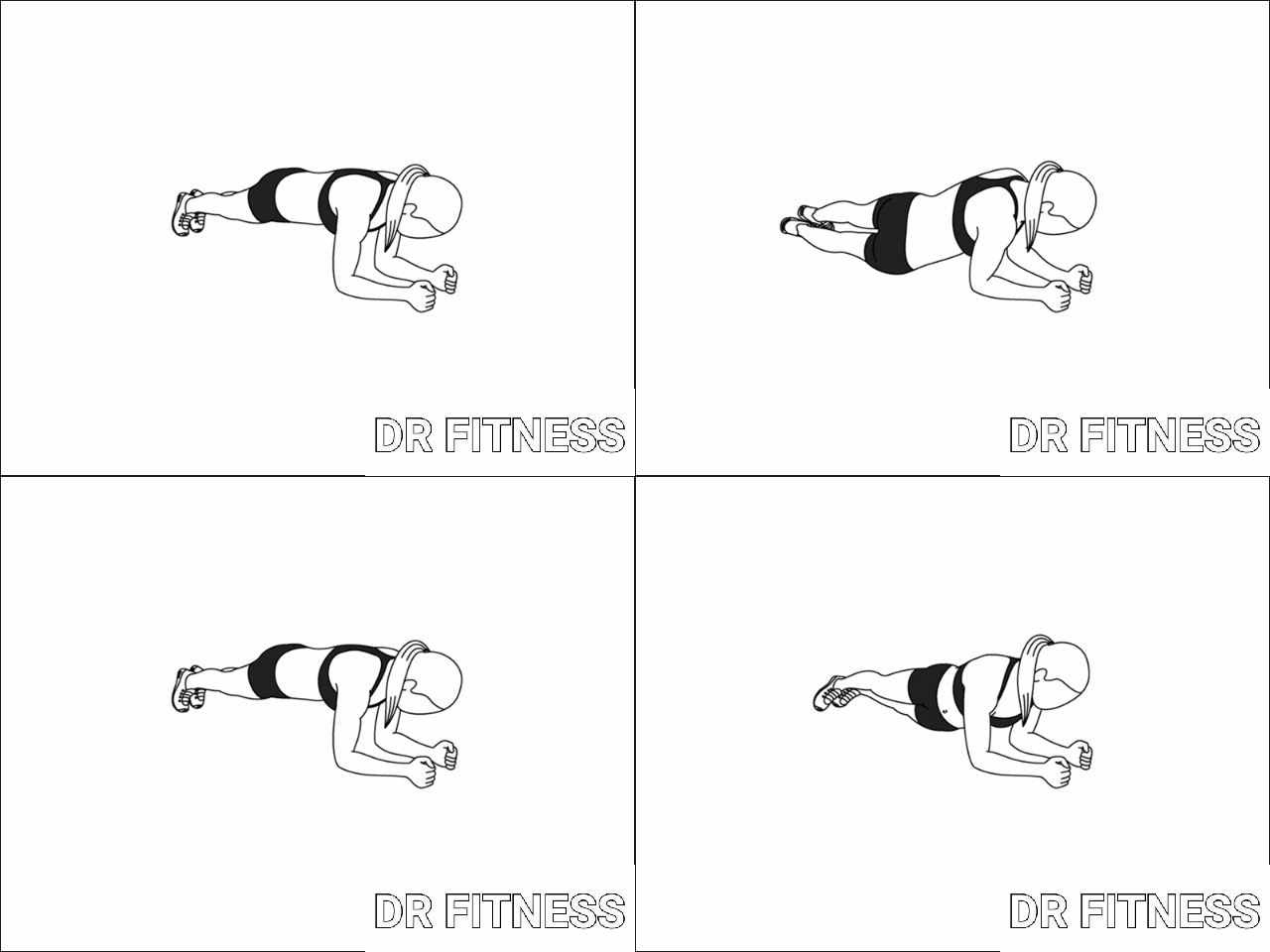
Plank Hip Dips
Setup
• Start in a forearm plank position with your body in a straight line from your head to your heels.
• Your elbows should be directly under your shoulders, and your forearms should be parallel to each other.
• Engage your core, glutes, and quads to keep your body stable.
• Keep your feet hip-width apart for balance.
Movement
• Slowly lower your right hip toward the floor by rotating your torso, without letting your knees or feet touch the ground.
• As you dip your right hip, keep your shoulders and upper body stable, avoiding any sagging in your lower back.
• Return to the starting position, bringing your right hip back to the neutral plank position.
• Repeat the movement on the left side by lowering your left hip toward the floor, then return to neutral.
Return
• Maintain a controlled, slow movement as you return to the neutral plank position after each dip.
• Avoid rocking or jerking your body; keep the motion deliberate.
Breathing
• Exhale as you dip your hip to one side.
• Inhale as you return to the neutral plank position.
6A. Cable Crunch
6B. Plank Hip Dips
Day 3
GLUTES & ARMS
“If It Doesn’t Challenge You, It Won’t Change You!”
5 TO 10 MINUTE WARM-UP
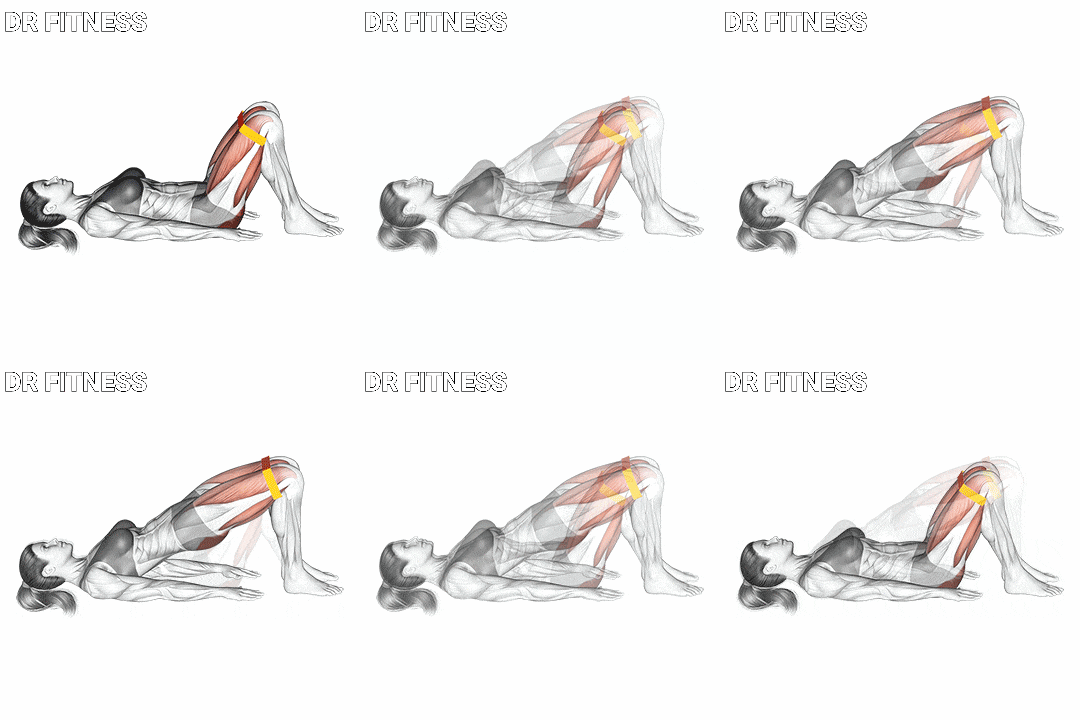
1. Bodyweight Banded Glute Bridge
Setup
• Lie on your back with your knees bent and feet flat on the floor, about hip-width apart.
• Place a resistance band just above your knees (or around your thighs), making sure there is enough tension so the band is slightly stretched even in the starting position.
• Keep your arms at your sides, palms facing down for stability.
• Engage your core and squeeze your glutes to prepare for the movement.
Movement
• Press through your heels, squeezing your glutes and driving your hips upward toward the ceiling. At the top of the movement, your body should form a straight line from your shoulders to your knees.
• Actively push your knees outward against the resistance of the band to increase glute activation, while maintaining control of the movement.
• At the top of the bridge, squeeze your glutes and hold for 1-2 seconds, keeping your core engaged.
Return
• Slowly lower your hips back down toward the ground, one vertebra at a time, maintaining tension in the glutes and core.
• Keep your knees from collapsing inward during the descent, ensuring you maintain the outward pressure against the band.
Breathing
• Exhale as you press your hips up to the top position.
• Inhale as you lower your hips back down.
SUPERSET:
2A. Plated/BB Glute Bridge
2B. DB Curtsey Lunge
BB Glute Bridge
Setup
• Position the barbell: Start by placing a barbell on the floor, and add weight according to your fitness level. You can use a barbell pad or a towel to cushion the bar if necessary, especially if you’re lifting heavy weights.
• Lie down: Sit on the floor with your back against a bench or elevated surface. Roll the barbell over your legs and position it so it rests directly on your hips (not on your stomach or pelvic bone).
• Foot placement: Bend your knees so that your feet are flat on the floor, about hip-width apart. Your heels should be close to your glutes, but not too close. Ideally, your knees should be at a 90-degree angle when you’re in the starting position.
Movement
• Engage your core and glutes: Press your heels into the floor, squeeze your glutes, and drive your hips upward toward the ceiling. As you lift, make sure to keep your back neutral (no arching) and your ribs down.
• Raise your hips: Drive through your heels, squeezing your glutes at the top of the movement. Your body should form a straight line from your shoulders to your knees at the peak of the bridge.
• Pause at the top: Hold for 1-2 seconds at the top to maximize glute contraction.
Return
• Lower your hips: Slowly lower your hips back to the floor, controlling the descent, and keeping tension on your glutes. Avoid letting the barbell drop too quickly, as this reduces muscle activation.
• Keep your core tight and maintain a neutral spine throughout the movement to prevent unnecessary stress on your lower back.
Breathing
• Exhale as you drive your hips up to the top position.
• Inhale as you lower your hips back down.
DB Curtsy Lunge
Setup
• Hold a dumbbell in each hand, with your arms at your sides and palms facing your body.
• Stand tall with your feet shoulder-width apart and your posture straight.
• Engage your core and maintain a neutral spine throughout the exercise.
Movement
• Step one leg diagonally behind you (like you’re curtsying), crossing it behind the other leg. Keep both knees bent at about 90 degrees.
• Lower your back knee toward the floor in a controlled motion, keeping your front knee tracking over your toes. The back knee should point toward the floor, not outward.
• As you step back, make sure your weight is in your front heel to emphasize glute and hamstring activation. The dumbbells should stay at your sides, but you can also hold them at your chest or shoulders if you want to increase difficulty or engage your upper body more.
• Keep your torso upright and engage your core as you move.
Return
• Push through your front heel to return to the starting position, standing tall again.
• Make sure to drive the movement from your glutes and not your knees, focusing on using your glute and hamstring to power the upward movement.
Breathing
• Exhale as you push through your front leg to return to the starting position.
• Inhale as you lower yourself into the curtsy lunge.
2A. Plated/BB Glute Bridge
2B. DB Curtsey Lunge
3. DB Single Leg Hip Thrust
Setup
• Sit on the floor with your upper back against a bench or elevated surface (such as a sturdy platform).
• Roll a barbell (or place a weight plate or resistance band) over your hips for added resistance, or simply use your body weight if you’re a beginner.
• Place one foot flat on the ground, directly underneath the knee, and extend the other leg straight out, keeping the foot off the ground. This is the starting position.
• Keep your arms at your sides or use them for stability on the floor.
Movement
• Push through the heel of the foot that is planted on the ground to lift your hips upward toward the ceiling.
• As you lift, focus on squeezing the glutes of the working leg and ensuring that your torso, hips, and the bent knee form a straight line at the top of the movement.
• Keep your core engaged and your back neutral to avoid hyperextension or excessive arching in your lower back.
Top Position
• At the top of the movement, hold for a moment and squeeze the glutes. Your hips should be fully extended, and your body should form a straight line from your head to the heel of your planted foot.
• Make sure the knee of the raised leg remains extended and not bent.
Return
• Slowly lower your hips back to the starting position, keeping control of the movement and maintaining tension on the glutes and hamstrings.
• Do not let your hips drop too quickly — the descent should be slow and controlled.
Breathing
• Exhale as you lift your hips up.
• Inhale as you lower your hips back down to the ground.
4. Cable/Banded Kickback
Setup
• Attach an ankle strap to the low pulley on the cable machine.
• Adjust the weight on the machine to your preferred resistance level.
• Strap the ankle attachment to your ankle, ensuring it’s securely fastened.
• Stand facing the machine (or slightly angled), holding onto the machine or a sturdy surface for balance.
• Begin with your feet hip-width apart, a slight bend in your knees, and your core engaged. Your weight should be on your non-working leg.
Movement
• With your working leg (the one with the ankle strap) slightly bent, press through the heel and kick your leg straight back, behind your body, keeping your knee straight. Focus on driving the motion through your glutes.
• Ensure that your torso remains upright, and avoid leaning forward or arching your back excessively. Keep your core engaged for stability.
• At the top of the movement, squeeze your glute hard for a brief second before slowly returning your leg to the starting position. Don’t let your foot drop too quickly; keep tension on the glutes as you lower your leg back down.
Return
• Control the return of your leg without letting it swing forward too fast. Maintain tension on the cable and ensure the movement is slow and controlled.
• Do not let your body lean forward or rotate as you return the leg; keep your posture stable.
Breathing
• Exhale as you kick your leg back.
• Inhale as you return your leg to the starting position.
5. DB Incline Bicep Curl
Setup
• Set an incline bench at a 45–60-degree angle.
• Sit back on the bench with your chest against the incline, feet flat on the floor, and back slightly supported by the bench.
• Hold a dumbbell in each hand with an underhand grip (palms facing forward).
• Let your arms hang down fully toward the floor, keeping your elbows slightly bent and close to your torso. This is your starting position.
• Engage your core to prevent any arching in your lower back and maintain good posture throughout the exercise.
Movement
• Keeping your upper arms stationary, curl the dumbbells up by bending your elbows, bringing the weights toward your shoulders. Focus on using your biceps to lift the dumbbells.
• Squeeze your biceps at the top of the curl for a moment, holding the contraction.
• Keep your wrists neutral (don’t let them bend) and avoid swinging the weights.
• Slowly lower the dumbbells back down to the starting position, fully extending your arms and feeling the stretch in your biceps.
Breathing
• Exhale as you curl the dumbbells up.
• Inhale as you lower the dumbbells back to the starting position.
6. DB Hammer Curl
Setup
• Stand with your feet shoulder-width apart, with a dumbbell in each hand.
• Hold the dumbbells with a neutral grip (palms facing each other), keeping your arms fully extended by your sides.
• Engage your core and maintain a slight bend in your knees for stability. Your elbows should be close to your torso.
• Keep your posture straight and your back neutral.
Movement
• Curl the dumbbells up toward your shoulders by bending your elbows, while keeping your upper arms stationary. Focus on using your forearms and biceps to lift the weight.
• Keep your wrists neutral, and avoid twisting your hands or wrists during the curl.
• At the top of the movement, squeeze the brachialis and biceps, holding for a brief second to maximize the contraction.
• Slowly lower the dumbbells back to the starting position, maintaining control throughout the movement.
Breathing
• Exhale as you curl the dumbbells up.
• Inhale as you slowly lower the weights back down.
7. Overhead Rope Tricep Extension
Setup
• Attach a rope to the high pulley of a cable machine.
• Stand facing away from the machine and grab the rope with both hands, palms facing each other (neutral grip).
• Take a step forward to create tension in the rope, and bring your elbows overhead so that your upper arms are close to your ears. Your elbows should be bent at about 90 degrees at the start.
• Stand tall with your feet shoulder-width apart, engage your core, and make sure your back is straight to avoid any unnecessary strain on the lower back.
Movement
• Keeping your upper arms stationary and close to your ears, extend your elbows to push the rope upward and straighten your arms. Focus on squeezing your triceps at the top of the movement.
• Keep the movement controlled — avoid flaring your elbows outward or leaning your torso forward.
• At the top, fully extend your arms and feel the triceps contracting.
• Slowly lower the rope back to the starting position, maintaining tension on the triceps and not allowing your elbows to flare out. Your forearms should move up and down while your upper arms stay in place.
Breathing
• Exhale as you extend your arms, pushing the rope upward.
• Inhale as you return to the starting position, controlling the descent.
8. Straight Bar Tricep Pushdown
Setup
• Attach a straight bar to the high pulley of a cable machine.
• Stand facing the machine, feet shoulder-width apart, and grip the bar with both hands. Your palms should be facing down (overhand grip), with your hands positioned about shoulder-width apart.
• Take a step back so there’s tension on the cable. Keep your torso upright, chest out, and core engaged.
• Position your elbows at your sides, bent at about 90 degrees, and keep them close to your body throughout the movement. Your forearms should be parallel to the floor to start.
Movement
• Push the bar down by extending your elbows, using your triceps to drive the movement. Your forearms should move downward while your upper arms stay stationary and close to your body.
• Continue pushing the bar down until your arms are fully extended at the bottom, keeping the elbows pinned to your sides. At the bottom, squeeze your triceps for a moment to maximize contraction.
• Slowly return the bar to the starting position, maintaining control. Avoid letting the weight rise too quickly or allowing your elbows to flare out.
Breathing
• Exhale as you push the bar down, extending your arms.
• Inhale as you slowly return the bar to the starting position, keeping tension on the triceps throughout.
Day 4
GLUTES & ARMS
“You Can’t Fail If You Never Give Up. Just Keep Pushing Through”
5 TO 10 MINUTE WARM-UP
1. DB Walking Lunges
Setup
• Grab a dumbbell in each hand and let them hang naturally by your sides, palms facing inward.
• Stand tall with your feet hip-width apart, chest up, shoulders back, and core engaged.
• Keep a neutral spine, avoiding any rounding of the back.
Movement
• Step forward with one leg, taking a long stride, and lower your body into a lunge position by bending both knees.
• Your back knee should almost touch the ground, and your front knee should be at a 90-degree angle, ensuring it does not extend beyond your toes.
• Push through the heel of your front foot to stand back up, and immediately step forward with the opposite leg, lowering into the next lunge.
• Continue alternating legs as you move forward across the floor, keeping your torso upright and your core engaged to maintain balance and control.
Breathing
• Inhale as you step forward and lower into the lunge.
• Exhale as you push through the front foot and return to standing.
2. BB Squat
Setup
• Position the barbell: Set the barbell on a squat rack at about chest height. Make sure the bar is evenly loaded on both sides.
• Grip the bar: Step under the bar and position it across the upper traps (high-bar squat) or slightly lower on the back (low-bar squat), depending on your preference. Your hands should grip the bar slightly wider than shoulder-width.
• Stand tall: Keep your chest up, back straight, and core engaged. Tuck your elbows down and back to create tension in your upper back.
• Feet placement: Set your feet about shoulder-width apart, with toes pointing slightly outward (about 15-30 degrees). This foot placement can vary slightly depending on individual mobility and comfort.
Lift Off
• Engage your core: Take a deep breath and brace your core to stabilize your spine. This will help you maintain balance and proper posture throughout the lift.
• Lift the bar: Push through your legs to lift the bar off the squat rack, stepping back one or two steps. Set your feet firmly on the floor with your weight distributed evenly across your heels and midfoot.
Descent (Lowering the Bar)
• Hinge at the hips: Begin by pushing your hips back slightly and bending your knees at the same time. Focus on sitting back into the squat, rather than letting the knees shoot too far forward.
• Keep your chest up: As you lower yourself, make sure your back stays straight and your chest remains lifted. Keep your eyes focused on a point straight ahead to avoid leaning forward.
• Depth: Continue lowering yourself until your thighs are at least parallel to the ground, or lower if your flexibility and mobility allow. Ideally, aim to squat to at least parallel or deeper, but this will vary depending on your flexibility and mobility.
Ascent (Rising from the Squat)
• Push through your heels: Press through your heels and midfoot to stand up. Keep your chest up and back straight as you drive through the legs to return to a standing position.
• Extend your hips: As you rise, fully extend your hips and knees to return to the starting position.
• Breathing: Exhale as you rise back up from the squat.
Repeat
• After reaching the top, reset your posture, brace your core again, and repeat the movement for the desired number of reps.
3. Leg Press
Setup
• Adjust the seat: Sit on the leg press machine and adjust the seat so that your legs are bent at around a 90-degree angle when your feet are on the platform. The knees should be in line with your toes.
• Position your feet: Place your feet shoulder-width apart on the platform. Your toes should point slightly outward, but keep your heels flat. You can vary foot placement (higher, lower, wider, or narrower) to target different parts of the legs.
• Grip handles: If your machine has handles, hold onto them for support and stability.
• Set the weight: Choose an appropriate weight to begin with. Start with a lighter load to warm up, and increase as needed.
Movement
• Release the safety lock: Most leg press machines have a safety mechanism to prevent the weights from dropping. Make sure to release it before starting.
• Lower the weight: Begin the movement by slowly lowering the platform toward you. Bend your knees and lower the weight until your knees are at a 90-degree angle or slightly below. Keep your back pressed against the seat pad and avoid arching your lower back.
• Push the weight up: Push the platform back up by extending your knees. Drive through your heels and midfoot to fully extend your legs, but avoid locking your knees out at the top.
• Controlled movement: Maintain a controlled tempo throughout the movement. Avoid jerking or using momentum to lift the weight.
Breathing
• Inhale as you lower the platform toward your body.
• Exhale as you push the weight upward to the starting position.
4. Leg Extension
Setup
• Adjust the seat: Sit on the machine with your back against the backrest. Adjust the seat so that your knees align with the machine’s pivot point (around the same level as the top of your knees) and your lower legs are positioned comfortably under the padded bar.
• Position your legs: Place your lower legs under the padded bar so that the pad is resting just above your ankles. Your knees should be slightly bent, and the pad should not be on your shins, but comfortably resting on the lower part of your legs.
• Adjust the thigh pad: Adjust the thigh support pad so that it rests comfortably on top of your thighs to prevent your legs from lifting during the movement.
• Set the weight: Choose an appropriate weight for the exercise. Start light to focus on form, and increase weight as needed.
Movement
• Engage your core: Sit up straight, keeping your chest lifted and your back pressed against the seat. Engage your core muscles to stabilize your body.
• Extend your legs: Begin the movement by straightening your legs at the knees, lifting the padded bar by extending your knees. Focus on contracting your quadriceps (front of the thighs) as you extend.
• Squeeze at the top: Once your legs are fully extended, hold for a brief second and squeeze your quads for maximum contraction.
• Lower the weight: Slowly and with control, lower the padded bar back to the starting position by bending your knees. Avoid letting the weight drop quickly to ensure tension on the quads throughout the movement.
Breathing
• Exhale as you extend your legs and lift the weight.
• Inhale as you slowly lower the weight back down, controlling the movement.
5. Bulgarian DB Split Squat
Setup
• Find a bench: Start by placing a bench or elevated surface behind you. It should be about knee height or slightly lower.
• Hold the dumbbells: Grab a dumbbell in each hand, holding them with your arms fully extended at your sides, palms facing inward. Start with light weights to focus on form, then gradually increase weight.
• Position your feet: Stand a few feet in front of the bench with your feet shoulder-width apart. Position one foot on the bench behind you so that your back leg is elevated and your front foot is flat on the floor.
• Your front foot should be about 2-3 feet ahead of your back foot, and your front knee should be in line with your toes.
Movement
• Brace your core: Keep your chest up, shoulders back, and engage your core to maintain balance and stability.
• Lower your body: Slowly lower your hips toward the floor by bending your front knee, allowing your back knee to lower toward the ground. Your front thigh should become parallel to the ground or go slightly below parallel, depending on your flexibility.
• Ensure your front knee tracks over your toes, not caving inward. Keep your back leg bent and your torso upright throughout the movement.
• Push up: Push through the heel of your front foot and extend your knee to return to the starting position. Straighten your front leg without locking your knee, and engage your glutes and quads as you rise.
• Repeat on the other leg: After completing the desired number of reps, switch legs and perform the movement with the opposite leg.
Breathing
• Inhale as you lower yourself into the squat.
• Exhale as you push back up to the starting position.
6. Single Leg Weighted Calf Raise
Setup
• Stand tall: Stand upright with your feet about hip-width apart. Position yourself near a wall, bar, or sturdy object for support (optional, but recommended for balance).
• Lift one leg: Raise one foot off the ground and balance on the other leg. You can keep your raised leg bent or straight, but make sure you’re standing on the ball of your supporting foot.
• Foot position: Keep the toes of your working foot pointing straight ahead or slightly outward. Your heel should be raised so your weight is on the ball of the foot.
Movement
• Lift your heel: Push through the ball of your supporting foot to raise your heel as high as possible. Engage your calf muscles to lift your body upward.
• Tip: Focus on a controlled and deliberate movement. Don’t use momentum to lift your body.
• Squeeze at the top: At the top of the movement, pause for a brief second and squeeze your calf muscles for maximum contraction.
• Lower the heel: Slowly lower your heel back down toward the ground, controlling the descent. Allow your heel to drop below the level of your toes to fully stretch the calf muscles at the bottom.
• Repeat: Perform the desired number of repetitions on one leg, then switch to the other leg.
Breathing
• Exhale as you raise your heel and lift your body upward.
• Inhale as you lower your heel back down to the starting position.
7. Leg Press Calf Raise
Setup
• Adjust the leg press machine: Sit in the leg press machine and adjust the seat so your knees are comfortably bent, but not excessively so. Your feet should be placed on the platform with your toes pointing forward or slightly outward.
• Position your feet: Place the balls of your feet on the platform, ensuring that your heels are off the platform. Your toes should be aligned straight ahead, and your feet should be about hip-width apart.
• Select the weight: Choose an appropriate weight that allows you to perform the exercise with proper form. You can increase the weight progressively as you get stronger.
Movement
• Engage your core: Sit up straight with your back against the seat and your core engaged to maintain stability throughout the exercise.
• Lower your heels: Start by letting your heels drop down toward the bottom of the machine, stretching your calf muscles. Go as low as your ankle mobility allows without discomfort.
• Push through the balls of your feet: Push through the balls of your feet (not the toes) to raise the weight. Focus on contracting your calves to lift the platform as high as you can. Avoid using momentum and instead use a controlled movement to maximize calf engagement.
• Pause at the top: At the top of the movement, hold briefly and squeeze your calves for maximum contraction.
• Lower the weight: Slowly lower the platform back to the starting position, allowing your heels to drop below the level of your toes for a full stretch.
Breathing
• Exhale as you push the weight upward and contract your calves.
• Inhale as you slowly lower the weight back down.
Day 5 - BONUS DAY!
SHOULDERS & ABS
“The Body Achieves What The Mind Believes”
5 TO 10 MINUTE WARM-UP
1. Incline DB Press
Setup
• Adjust the bench: Set the incline bench to an angle of about 30 to 45 degrees. Too steep an incline (over 45 degrees) can shift focus to the shoulders instead of the chest.
• Choose dumbbells: Select an appropriate dumbbell weight. Start lighter if you’re new to the movement and gradually increase as you become more comfortable.
• Position yourself on the bench: Sit on the bench and lean back. Your feet should be flat on the floor, and your back should be firmly pressed against the backrest. Keep your chest up and your shoulders retracted (pulled back) to avoid strain.
• Grab the dumbbells: Hold a dumbbell in each hand with your palms facing forward (neutral grip). Begin with the dumbbells resting on your thighs.
Movement
• Lift the dumbbells: Use your thighs to help bring the dumbbells into position. Hold the dumbbells at chest level with your elbows bent at about a 90-degree angle. Your upper arms should be parallel to the floor, and your forearms should be perpendicular to the floor.
• Press the dumbbells up: Press the dumbbells upward by extending your arms while maintaining control. Focus on using your chest to move the weight, not just your arms. Keep the dumbbells aligned with your chest and avoid letting them drift too far outward.
• As you press the dumbbells, ensure that your elbows are not locking out at the top to keep tension on the chest.
• Squeeze at the top: At the top of the movement, pause briefly and squeeze your chest muscles to maximize the contraction.
• Lower the dumbbells: Slowly lower the dumbbells back down in a controlled manner, resisting gravity. Lower the dumbbells until your elbows are at or slightly below the level of your chest for a deep stretch.
• Repeat: Perform the desired number of repetitions, focusing on controlled movement and full range of motion.
Breathing
• Exhale as you press the dumbbells up.
• Inhale as you lower the dumbbells back down.
2. DB Arnold Shoulder Press
Setup
• Sit or stand: You can perform the Arnold press while seated on a bench with back support or standing, depending on your preference and goal (standing engages the core more).
• Hold the dumbbells: Start with a dumbbell in each hand, holding them at shoulder height with your palms facing you. Your elbows should be bent at a 90-degree angle, and the dumbbells should be close to your shoulders, elbows slightly forward (not directly to the sides).
• Feet position: If you’re standing, keep your feet shoulder-width apart with a slight bend in your knees for stability.
Movement
• Press and rotate: As you press the dumbbells overhead, rotate your wrists so that your palms face forward as your arms extend. This rotation helps to engage the front delts more effectively.
• Tip: Focus on maintaining a controlled motion, avoiding jerking or using momentum.
• Extend fully: Press the dumbbells all the way up, but avoid locking out your elbows at the top. Keep tension on the deltoids.
• Lower and rotate: Slowly reverse the movement by lowering the dumbbells back to shoulder height, rotating your wrists back so your palms face you again. Keep your core tight and maintain control of the weights throughout the movement.
• Repeat: Perform the desired number of repetitions, ensuring you maintain good form and a controlled range of motion throughout each rep.
Breathing
• Exhale as you press the dumbbells upward and rotate your wrists.
• Inhale as you lower the dumbbells back down to the starting position.
3. DB Reverse Flys
Setup
• Stand tall: Begin by standing with your feet shoulder-width apart, knees slightly bent to maintain a stable base. Keep your core engaged to avoid any strain on your lower back.
• Grab dumbbells: Hold a dumbbell in each hand with a neutral grip (palms facing each other). Let your arms hang straight down in front of you with a slight bend in your elbows. You can also hold the dumbbells with your palms facing down if you prefer.
• Lean slightly forward: Hinge at your hips, pushing your hips back and lowering your torso to about a 45-degree angle. Keep your back flat and chest open, avoiding rounding your spine.
• Make sure your head stays aligned with your spine (looking slightly forward, not down).
Movement
• Lift the dumbbells: From the starting position, raise the dumbbells out to the sides, keeping your arms slightly bent throughout the movement. Your elbows should remain locked in the same position throughout the lift, and you should aim to keep the movement smooth and controlled.
• Focus on squeezing your shoulder blades together as you raise the dumbbells, contracting the rear delts and upper back muscles. The dumbbells should travel along the line of your body (no higher than shoulder level).
• Pause at the top: When the dumbbells are level with your shoulders, hold briefly at the top and squeeze your rear delts and upper back for a second to maximize muscle contraction.
• Lower the dumbbells: Slowly lower the dumbbells back down to the starting position, resisting gravity and maintaining control of the movement.
• Repeat: Perform the desired number of reps, maintaining a controlled pace throughout.
Breathing
• Exhale as you lift the dumbbells outward and squeeze your shoulder blades.
• Inhale as you lower the dumbbells back to the starting position.
4. Prone Y-raises
Setup
• Lie face down: Start by lying prone (face down) on an incline bench, a flat bench, or a stability ball. If you’re using a flat bench, position your body so your chest is hanging over the edge and your head is aligned with your spine. Alternatively, you can also perform this exercise lying flat on the floor.
• Grab the dumbbells: Hold a light to moderate dumbbell in each hand with a neutral grip (palms facing each other). Your arms should be extended straight down toward the floor.
• Position your body: Keep your feet flat on the ground or your legs supported on the bench. Engage your core to avoid arching your lower back. Keep your head in line with your spine throughout the movement.
Movement
• Raise your arms: Start by lifting both dumbbells in a “Y” shape, keeping your arms straight but with a slight bend at the elbows. As you raise the dumbbells, your arms should form a “Y” shape in front of you with your thumbs pointing upward and your palms facing each other.
• Squeeze at the top: When your arms reach shoulder height or just slightly higher, pause and squeeze your shoulder blades together. Focus on contracting the muscles between your shoulder blades (rhomboids, traps, and rear delts) at the top.
• Lower with control: Slowly lower the dumbbells back to the starting position, resisting gravity throughout the movement to maintain tension on the target muscles.
• Repeat: Perform the desired number of repetitions, maintaining good form and avoiding swinging the weights.
Breathing
• Exhale as you lift the dumbbells and form the “Y” shape with your arms.
• Inhale as you lower the dumbbells back to the starting position.
CIRCUIT:
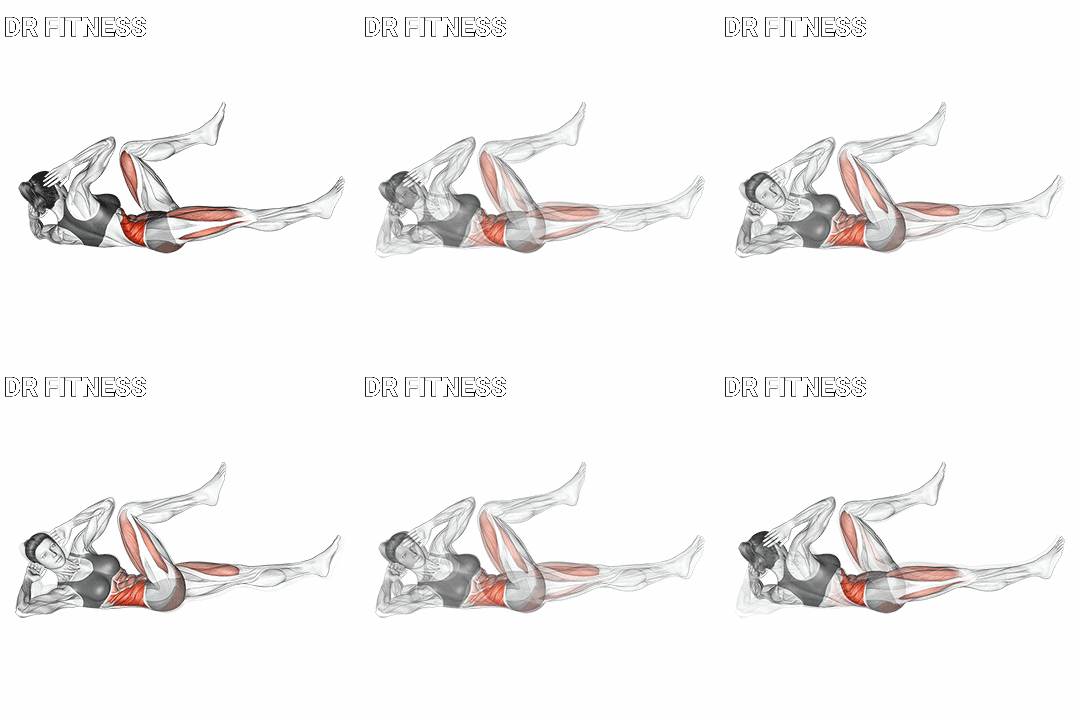
5A. Bicycle Crunch
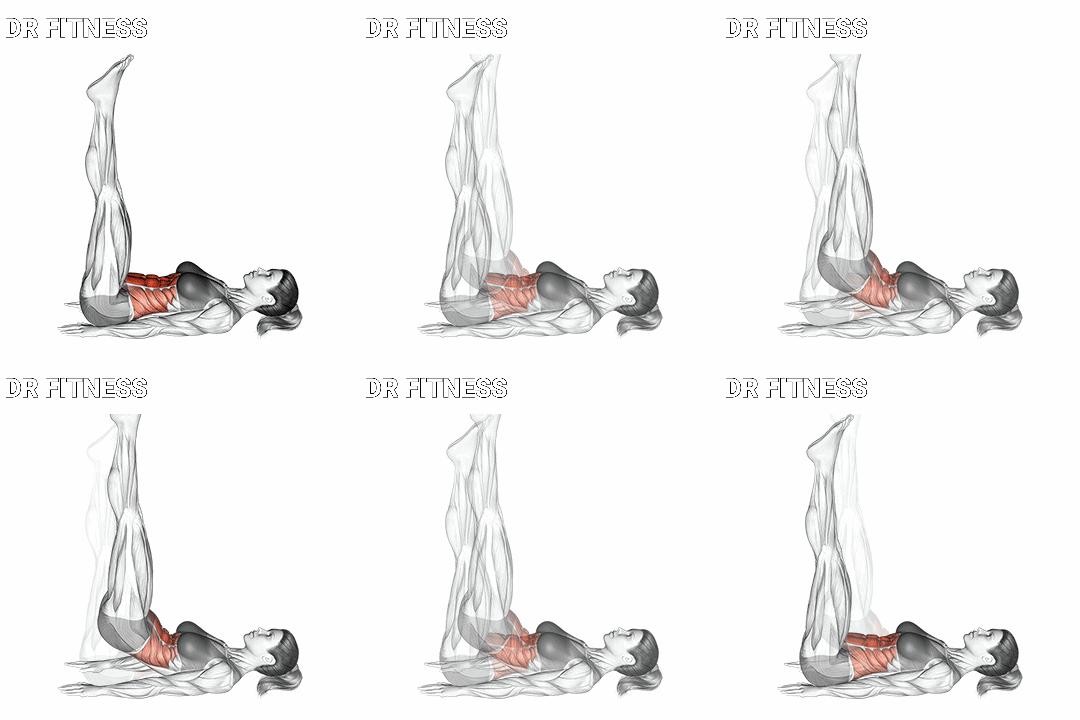
5B. Reverse Crunch
5C. Mountain Climber
Setup
• Lie on your back: Start by lying flat on your back on a mat with your knees bent and your feet flat on the floor.
• Position your hands: Place your hands lightly behind your head or at the sides of your head, with your elbows wide (not touching your face). Avoid pulling on your neck during the movement.
• Lift your legs: Bring your knees up so that your thighs are at a 90-degree angle to the floor, and your calves are parallel to the floor. Your knees should be directly over your hips.
Movement
• Extend one leg: While simultaneously twisting your torso to bring your left elbow toward your right knee, extend your left leg straight out at a slight angle. Keep the extended leg hovering above the ground, not touching it.
• Switch sides: As you bring your left elbow toward the right knee, rotate your torso to the left and bring your right knee toward your chest. Straighten your right leg as you twist to the other side, mimicking a “pedaling” motion, like riding a bicycle.
• Alternate: Continue alternating sides in a controlled, fluid motion. Make sure to engage your core muscles and keep your movements steady.
Breathing
• Exhale as you twist and bring your elbow toward your knee.
• Inhale as you extend your leg and return to the starting position for the opposite side.
5A. Bicycle Crunch
5B. Reverse Crunch
5C. Mountain Climber